Guides
Chain-of-Custody Forms for Specimen Couriers: What to Document in Every State
A state-agnostic specimen chain of custody form and handoff checklist for medical couriers, plus the New York steps that change the paperwork.
What to take away
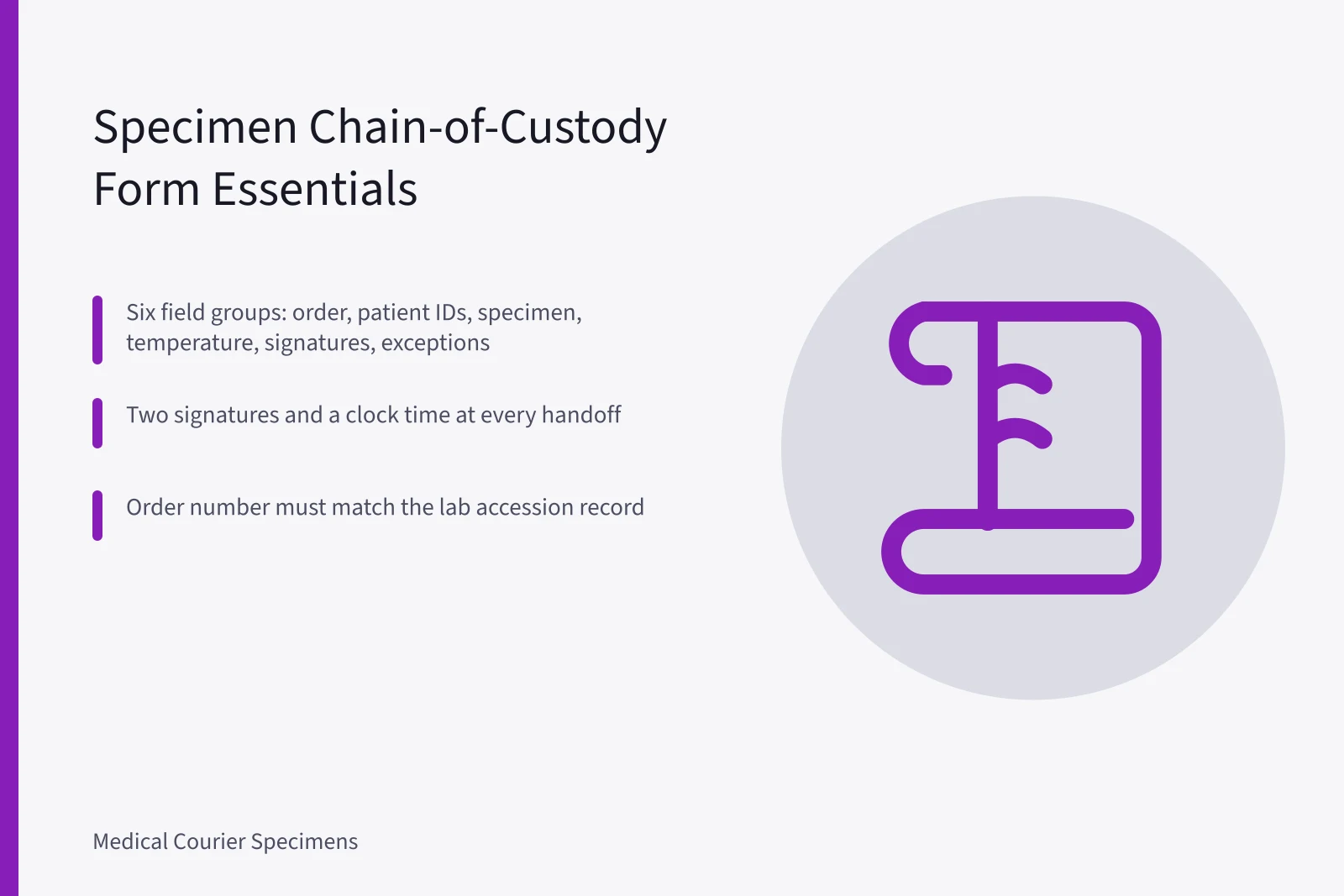
- Six field groups carry every specimen chain of custody formorder details, patient identifiers, specimen description, temperature and packaging, transfer signatures with times, and an exception line.
- Two signatures and a clock time at each handoff are what make a custody transfer record usable in a dispute or an audit.
- The courier log has to reconcile with the laboratory accession record, so the same order number should appear on both.
- HIPAA business associate duties apply to couriers that transmit protected health information, so a signed BAA belongs with the form.
- New York layers state laboratory rules on top of the federal baseline, adding steps a generic form does not capture.
The six field groups on a specimen custody transfer record
A form that misses a field group fails the first time a lab questions a result. Build the page around six blocks and every route, client and specimen type fits inside them. The practical detail is set out in Does a Medical Courier Need a.
- Order detailsrequisition number, client account, collection site, ordering provider.
- Patient identifiersfull name plus date of birth or a medical record number. Use two identifiers, never one.
- Specimen descriptiontype, container, number of tubes, volume when the assay requires it.
- Temperature and packagingambient, refrigerated or frozen, plus the packaging condition at pickup.
- Transfer signaturesprinted name, signature, date, time to the minute, and location for each custody change.
- Exceptionsleaks, missing labels, temperature excursions, resealed bags, and the person notified.
A form layout you can copy
| Section | Fields to print | Why it matters |
|---|---|---|
| Header | Courier company, lab client, BAA reference, run date | Ties the page to a contract and a shift |
| Pickup block | Requisition number, collection site, pickup time, courier signature | Starts the custody clock |
| Specimen block | Patient identifiers, specimen type, tube count, temperature | Proves what moved and under what conditions |
| Handoff block | Receiving name, signature, time, badge or employee ID | Shows who accepted custody next |
| Close-out block | Lab accession number, delivery time, exceptions, reviewer initials | Closes the loop with the laboratory record |
Documentation checklist at every handoff
- Two patient identifiers match the requisition.
- Tube count and specimen type match the manifest line.
- Temperature reading and packaging condition recorded.
- Pickup time entered to the minute.
- Receiving staff print, sign and time the transfer.
- Exceptions written in short notes, with the name of the person notified.
Example: a 6:40 a.m. pickup at a Phoenix draw station
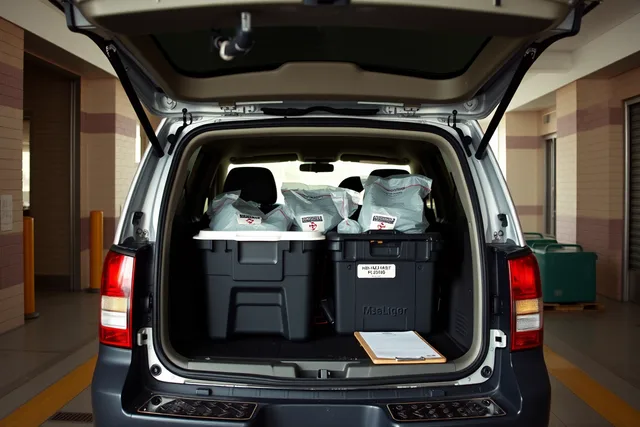
A courier collects 14 ambient tubes and two refrigerated tubes. The manifest lists 16. The form records the requisition number, two identifiers per tube, the 6:40 a.m. pickup time, the cooler temperature and the phlebotomist who signed.
At the lab dock at 8:05 a.m., the receiving tech counts 15 tubes. The courier writes the shortage on the exception line, notes the call to the draw station, and both parties sign. That single line answers the audit question months later.
Retention, HIPAA paperwork and mileage records
Retention periods come from the laboratory's accreditation and its state rules, not from courier preference. Ask each lab client what it expects, then write the answer into the service agreement.
When a courier moves protected health information for a covered entity, the relationship can fall under the HIPAA business associate definition. The HHS business associate guidance explains when a signed BAA is required before the first run.
The governing definition sits in 45 CFR 160.103, which covers persons who transmit protected health information on a covered entity's behalf.
Keep transport records the way you keep vehicle records. The standard mileage rate needs a log of date, miles, destination and business purpose, as IRS Publication 463 describes. A route sheet that captures pickup and delivery times serves both habits.
Where state rules change the paperwork
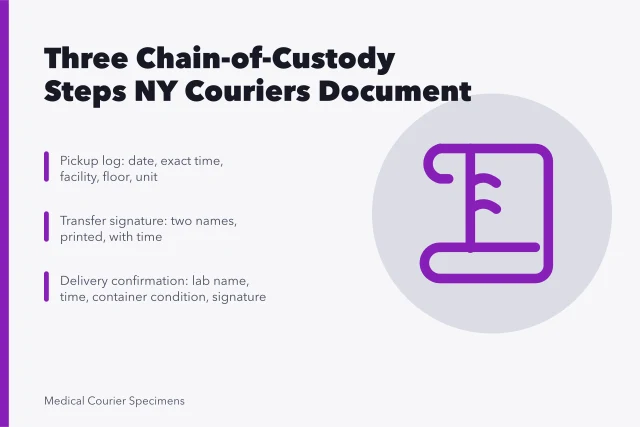
Federal rules set a floor. States, accreditation bodies and individual laboratories add fields on top of it. Three chain-of-custody steps New York couriers document under NYS lab rules are the pickup log, the transfer signature and the lab delivery confirmation.
Elsewhere, state health codes govern clinical laboratories and set their own record expectations. Inspection programs add items too. The client's specimen handling policy usually names the exact fields, so read it before printing a run sheet.
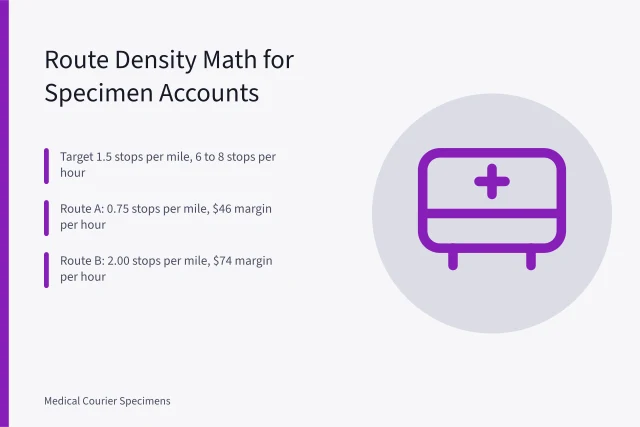
Route design, staffing and client pricing sit outside the form. Medical courier business operations covers those costs and margins. When a lab wants a digital trail, a specimen tracking log that stores scan events and timestamps can replace part of the paper page.