Guides
Keeping the books in a medical courier business: what to record and when
Medical courier bookkeeping organized around the cash cycle: coding costs by route, invoicing that survives a query, and closing the gap to payment.
What to take away
- Code everything by route from the first month. Without it you have a set of accounts that tell you the business is fine and cannot tell you which route is carrying the others.
- The cash gap, not profitability, is what ends courier businesses. Drivers are paid weekly and institutional customers pay on their own terms.
- Most late payments in this trade are documentation problems wearing a collections costume. An invoice that cannot be traced to a completed run will sit unpaid and nobody will call to say why.
- Reconcile the run record to the invoice every cycle. It takes an hour and it removes the argument entirely.
Tax treatment and record retention obligations depend on your jurisdiction and your structure. Nothing here is tax or accounting advice; confirm the specifics with a qualified accountant.
Set the books up by route
Three coding decisions, made once, do most of the work.
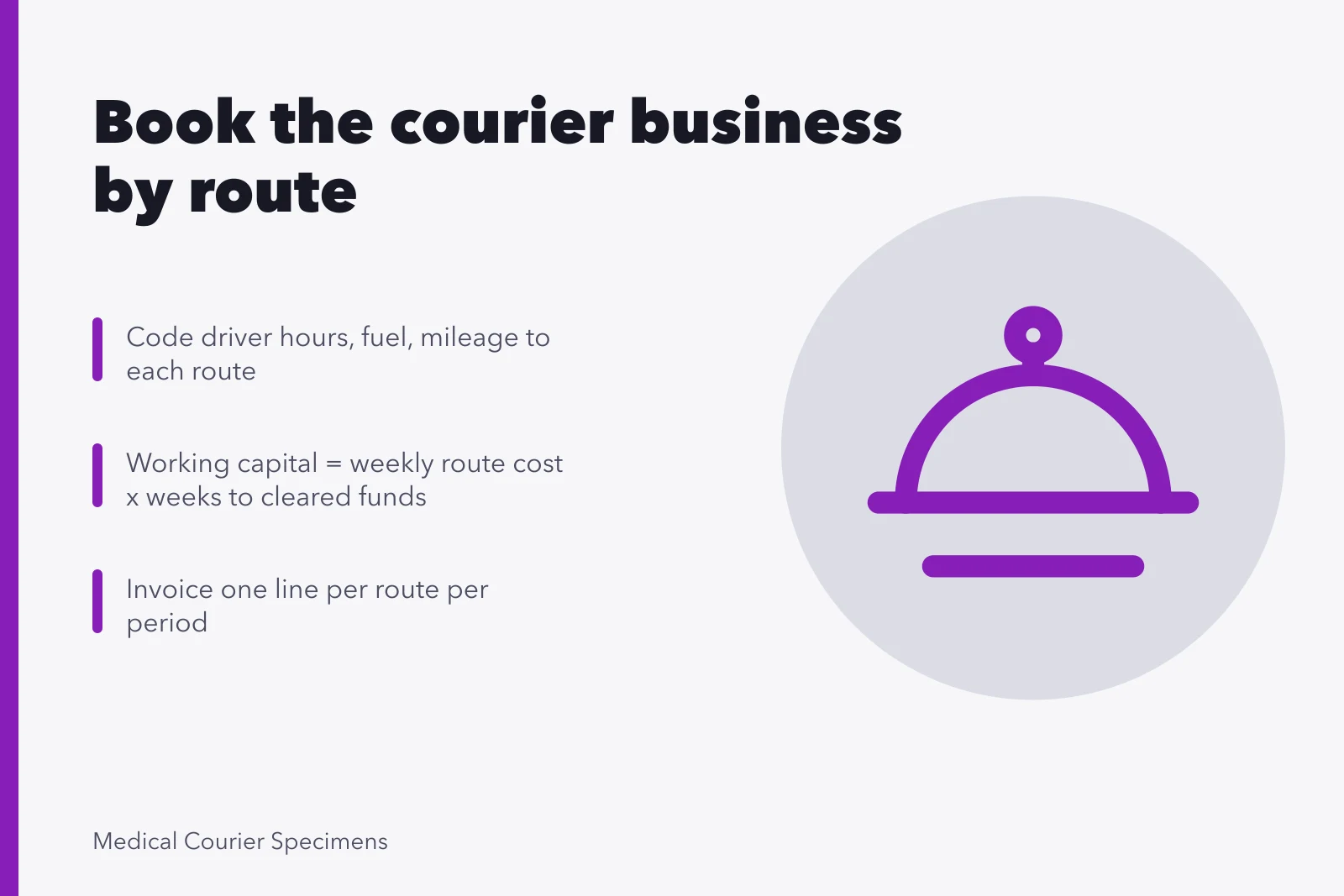
- A cost center per route. Driver hours, fuel, mileage costs and consumables all coded to the route that caused them.
- A separate line for fixed costs. Insurance, software, phone, administration, storage. These belong to the business, not to a route, and allocating them arbitrarily hides more than it reveals.
- A separate line for standby and cover. The hours you pay for availability rather than for work. Buried inside a route, they make scheduled work look worse than it is and urgent work look better.
That structure lets you answer the two questions that actually arise: is this route worth keeping, and can the business afford another vehicle. The arithmetic that uses it is in the software and KPI guide, which also covers how the run data should reach the books in the first place.
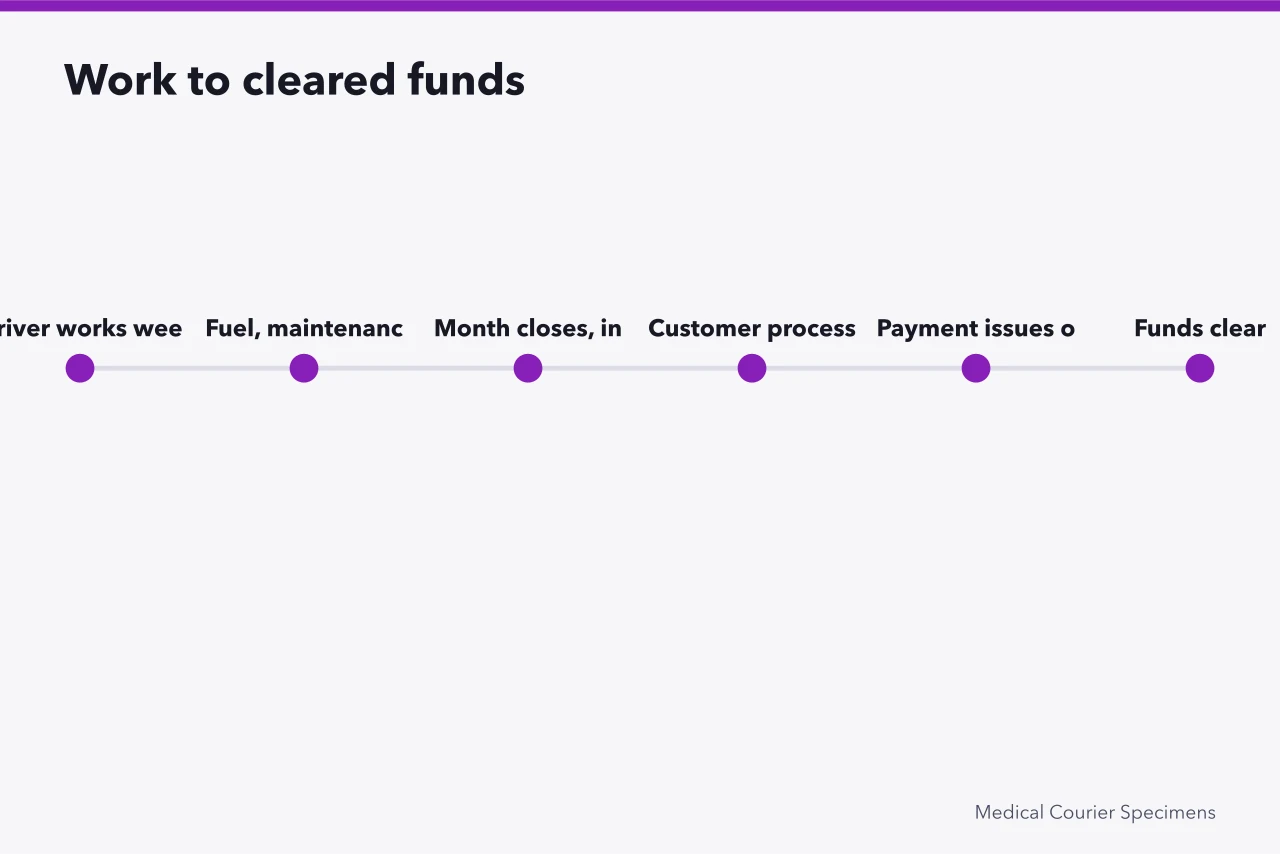
The cash cycle, written out
- The driver works a week and is paid on your payroll cycle.
- Fuel, maintenance and consumables are paid as they arise.
- The month closes and you invoice.
- The customer's process approves the invoice.
- Payment issues on their terms.
- Funds clear.
Between step one and step six sits your working capital requirement. Write it as weekly_route_cost x weeks_from_work_to_cleared_funds, and calculate it from the customer's actual behavior rather than from their stated terms.
Two features make this trade worse than it looks. Institutional payment terms are set by the buyer. For a new supplier, they are rarely negotiable.
The gap scales with growth. When a second route starts, your working capital requirement doubles. That is precisely when the business feels most successful. Growth that doubles that requirement raises the stakes on every contract clause you sign.
Invoicing that survives a query
An invoice in this trade is a claim about work performed, and it will be checked against the customer's own records. Build it so that check succeeds:
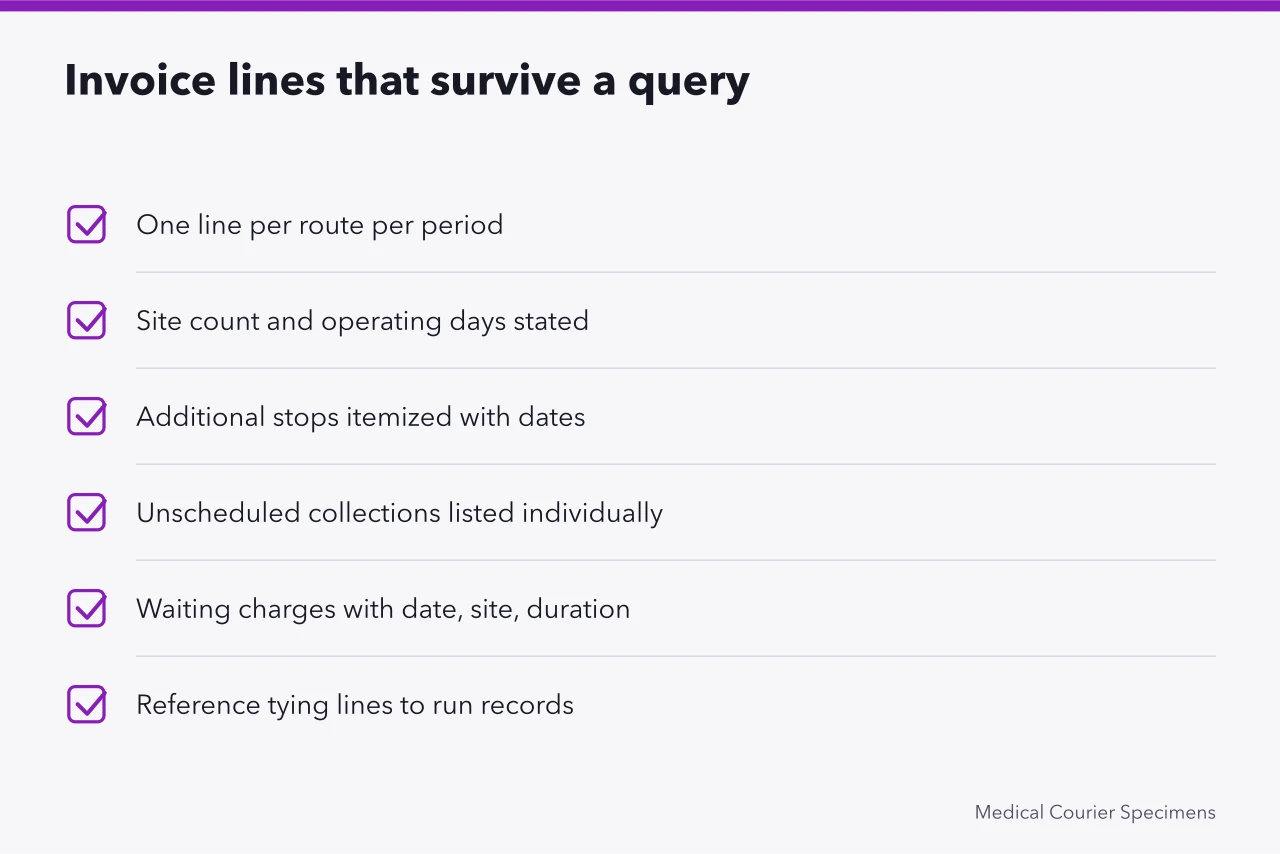
- One line per route per period, with the site count and the operating days stated.
- Additional stops itemized, with dates and site names.
- Unscheduled collections listed individually, with the date and the requesting person where you have it.
- Waiting charges shown with the date, the site and the duration, referencing the threshold in the agreement.
- A reference that ties every line to run records you can produce on request.
Send it on the same day each cycle. Predictable invoicing gets processed; irregular invoicing gets queued.
When an invoice is queried
- Do not adjust it before checking. Pull the run records for the disputed lines first.
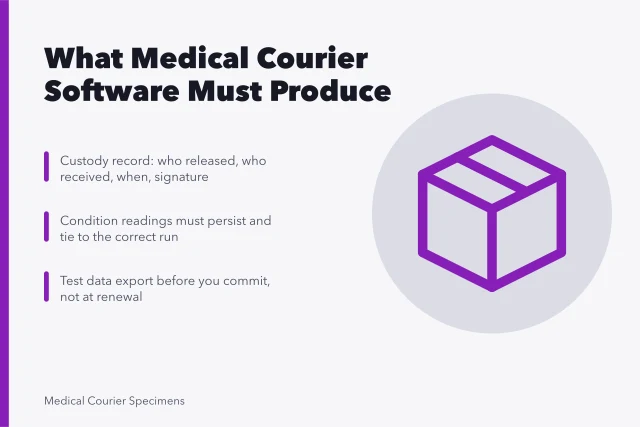
- Send the evidence rather than an explanation. A custody record with times ends the conversation.
- If the evidence is missing, credit the line immediately and fix the recording gap the same week.
- Log the query with its cause. Repeated queries from one account almost always trace to one ambiguous term in the agreement.
- Re-read the term rather than arguing the invoice, and fix it at the review.
That third step is uncomfortable and correct. An operator who credits an unevidenced line quickly keeps the relationship; one who argues without evidence loses both the line and the trust.
Closing the cash gap
- Invoice on a fixed cycle, without exception.
- Make sure the invoice matches the format the customer's system wants, including any reference or purchase order field. A missing reference is the most common cause of a silent delay.
- Confirm receipt rather than assuming it, and know the name of the person who processes it.
- Chase on a schedule that starts before the due date passes, not after.
- Keep a facility in place before you need it, not while you need it.
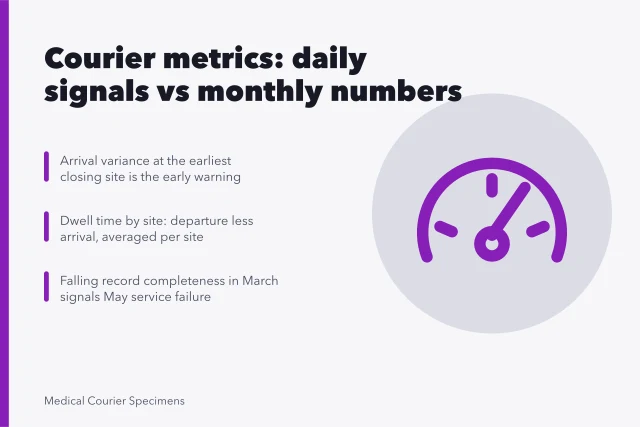
- Watch days to cleared payment by payer type, and treat a lengthening figure as a documentation question first.
Records, retention and separation
Keep business and personal money entirely separate from the first day. Keep every supporting document, and store them so a specific month can be produced quickly.
The IRS guidance on records a business should keep sets the baseline. You may use any recordkeeping system suited to your business if it clearly shows income and expenses, with supporting documents behind it.
Two retention periods apply to a courier and they are not the same. Financial records follow the tax baseline. Operational records, meaning custody and condition evidence, usually follow the laboratory's protocol, which is often longer. Store to whichever is longer and write the period down.
The data behind the books is sensitive
Your accounting system holds customer relationships and, through the run records it reconciles to, information about clinical sites and patients. Treat it as sensitive rather than as back office administration.
The NIST small business quick start guides list controls a business with no security staff can run. These include strong authentication, quick access removal when someone leaves, and backups checked by restoring one.
The CISA resources for small and medium businesses gather broader guidance for groups this size. Tooling questions, such as the export test that protects evidence, appear in how to evaluate dispatch software.
The monthly routine
- Reconcile bank accounts.
- Reconcile run records to invoices, line by line, for at least one account.
- Code any uncoded costs to a route while you still remember what they were.
- Update days to cleared payment by payer.
- Review the fixed cost list and delete anything no longer used.
- Note one thing to change, with a date.
An hour, monthly. The single most valuable output is the route level picture, because it tells you whether growth is worth pursuing at all. If it is, the readiness tests are in the guide to adding routes and territory, and whether a new territory can support the work is addressed in which local markets support a courier route.
Common questions
Do I need an accountant?
For structure, tax and the first year setup, almost certainly. For the monthly routine above, no. The mistake is outsourcing the route coding, because that is the part only you can define.
Cash or accrual?
That is a question for your accountant and depends on your structure and jurisdiction. What matters operationally is that you can see the cash gap regardless of which basis the accounts use.
Should I offer a discount for faster payment?
Compare the discount against what the delay actually costs you in financing. Institutional payers frequently cannot pay faster whatever you offer, so the offer costs margin and changes nothing.
What is the earliest sign of trouble?
Days to cleared payment lengthening while volumes stay flat. It catches documentation problems, customer problems and cash problems at once, and it is the measure owners notice last.