Guides
A Guide to Cold Chain Packaging for Medical Courier Specimens
Cold chain packaging for medical specimens follows a fixed sequence: validate the container, condition the coolant, pack to IATA 650, and log the temperature.
What to take away
- Cold chain packaging for medical specimens starts with a validated shipping system, not with a box and a bag of ice.
- Dry ice is a Division 9 hazardous material under US DOT rules, and air shipments follow IATA packing instructions 650 for Category B.
- Gel packs hold 2 to 8 C for ambient-temperature specimens; dry ice holds roughly minus 70 C for frozen ones. The two are not interchangeable.
- The step that decides the result is conditioning the coolant before it goes in the box.
- A single temperature excursion in transit is invisible on the delivery receipt, so the data logger is your only proof.
What has to be true before the first step
You need a shipping system that a lab or a packaging vendor has already validated for your payload mass and your expected transit time. A validated system is a specific box, a specific liner, a specific coolant mass, and a written protocol. Mixing a validated box with a different coolant voids the validation.
You also need the specimen classified. Category A is an infectious substance affecting humans, UN2814. Category B is UN3373, and it is the far more common shipment for routine clinical work. The classification decides the packaging, the marking and the paperwork. Our DOT and IATA rules for specimen couriers walks through the two categories side by side.
The sequence
- Inspect the outer packaging for cracks, crush damage or a compromised gasket. Reject anything that fails.
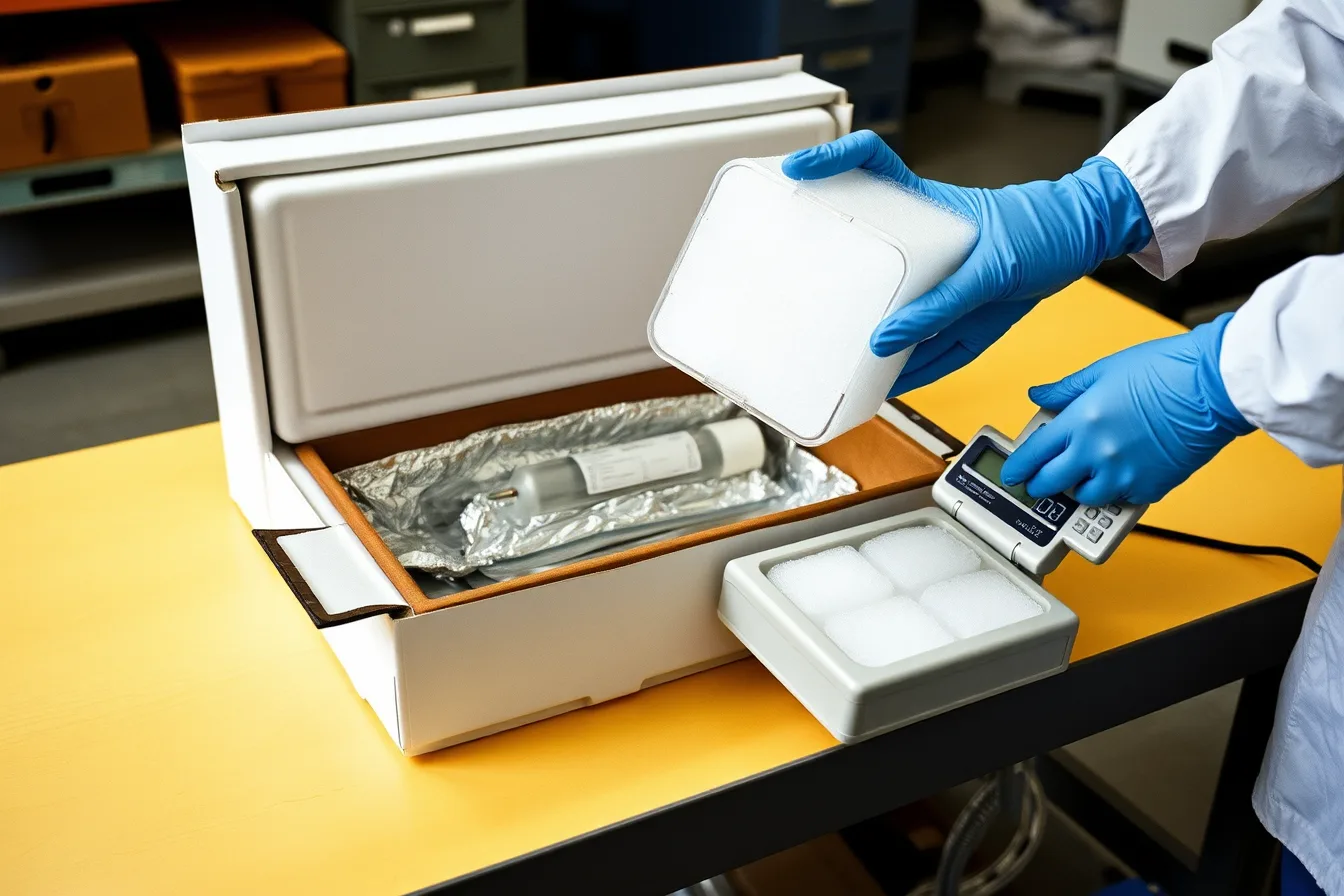
- Place the primary receptacle in absorbent material sized to hold the full liquid volume.
- Seal the secondary packaging and confirm the absorbent sits under and around the primary container.
- Condition the coolant. Gel packs go to the refrigerator or freezer per the protocol. Dry ice goes in at full mass, never topped off with a partial block.
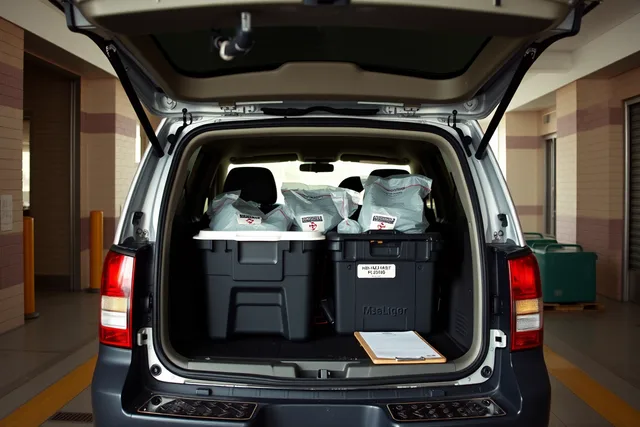
- Load the coolant, then the specimen, then the data logger, in that order.
- Close the lid, apply the UN3373 or UN2814 marking, and record the seal number.
The step that decides the result
Conditioning the coolant is where most runs are won or lost. A gel pack straight from a room-temperature shelf will pull heat out of the payload for the first hour and then stop working. A dry ice block that has been sitting open in a warm vehicle has already sublimated away part of the mass you were counting on.
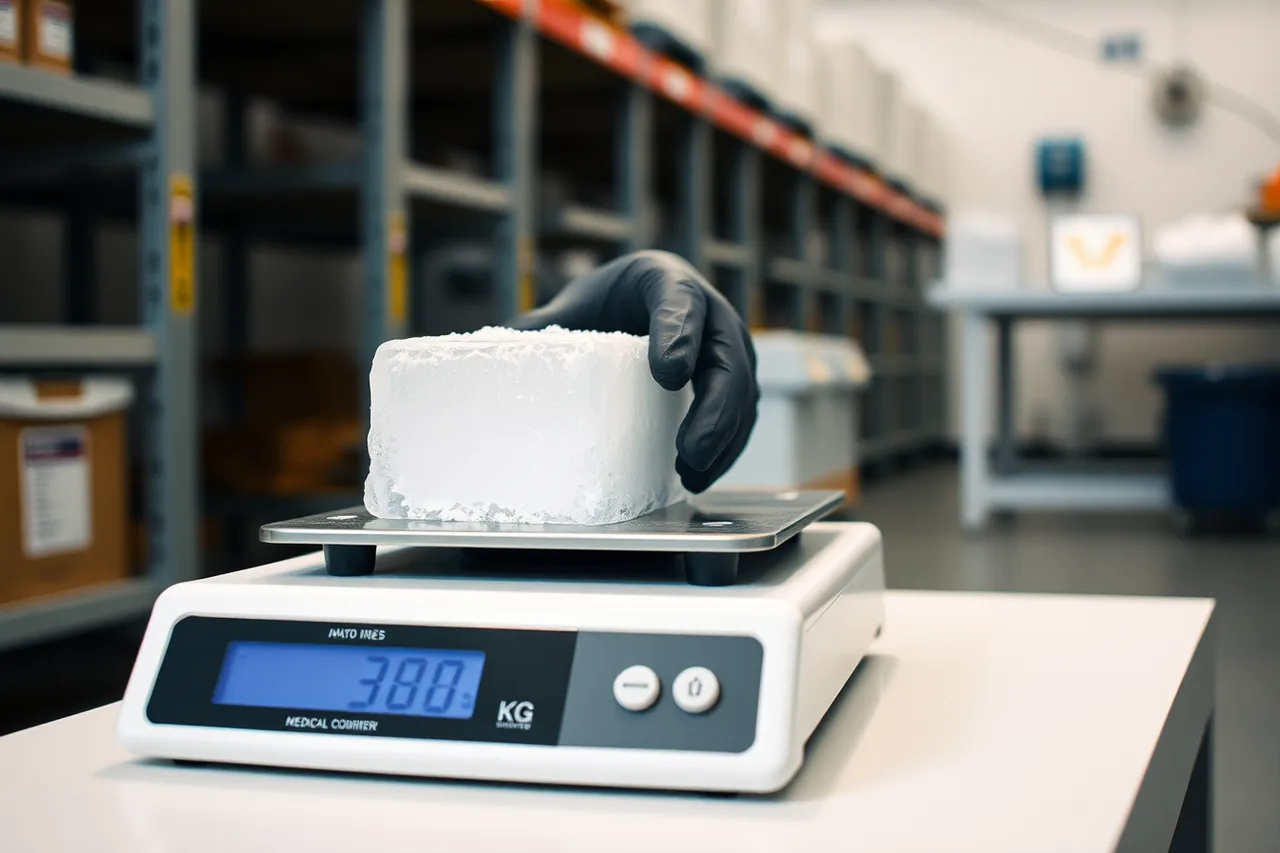
Weigh the coolant. A validated protocol states a mass, not a count of packs. If the protocol says 2.5 kg of dry ice, a scale reading of 2.1 kg is a failed step, not a rounding error.
How to check each step came out right
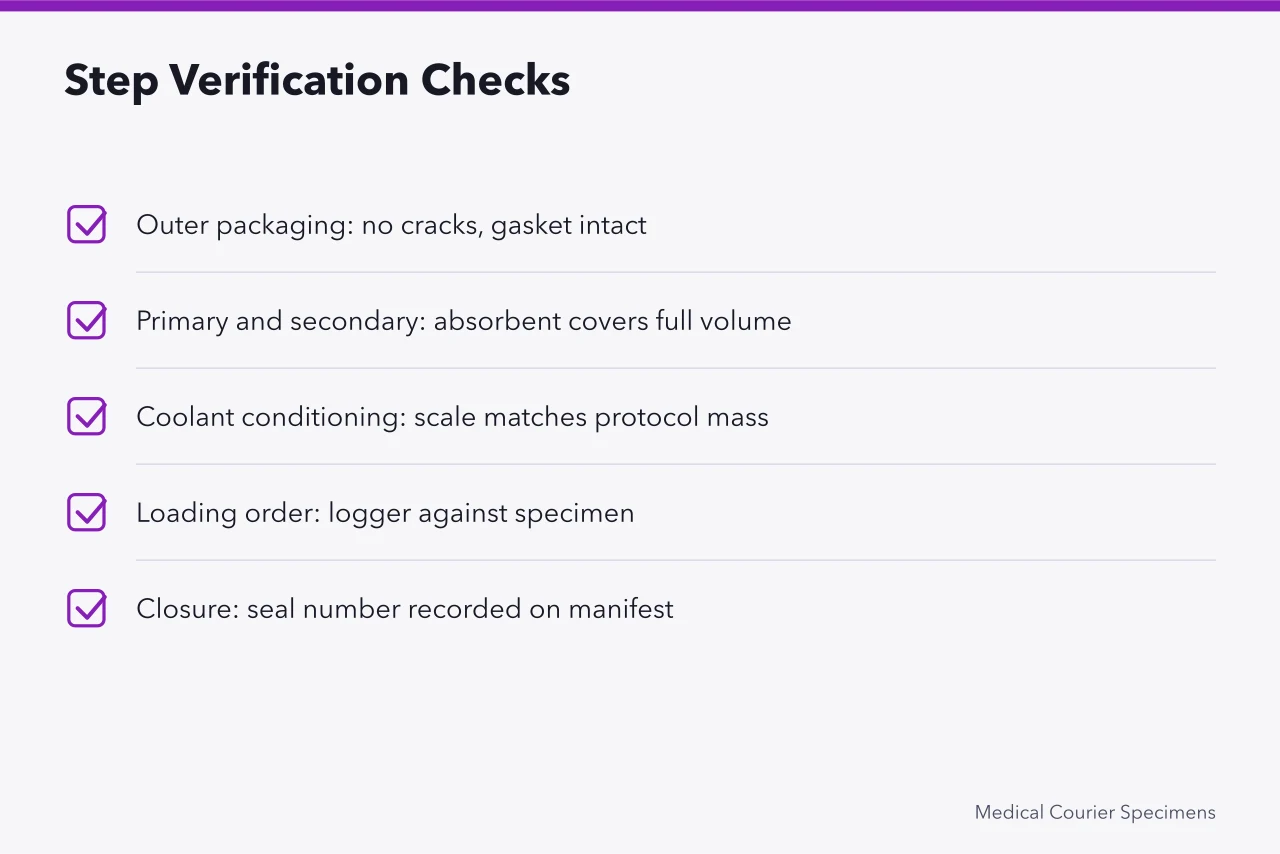
| Step | Visible or measurable check |
|---|---|
| Outer packaging | No cracks, gasket intact, latch closes flush |
| Primary and secondary | Absorbent covers the full liquid volume |
| Coolant conditioning | Scale reading matches the protocol mass |
| Loading order | Logger sits against the specimen, not against the coolant |
| Closure | Seal number recorded on the manifest |
After delivery, download the logger. A clean run shows the payload staying inside the stated band for the whole transit window. A run that dips below the band for even 20 minutes is an excursion the receiving lab will flag.
What to do when a step goes wrong
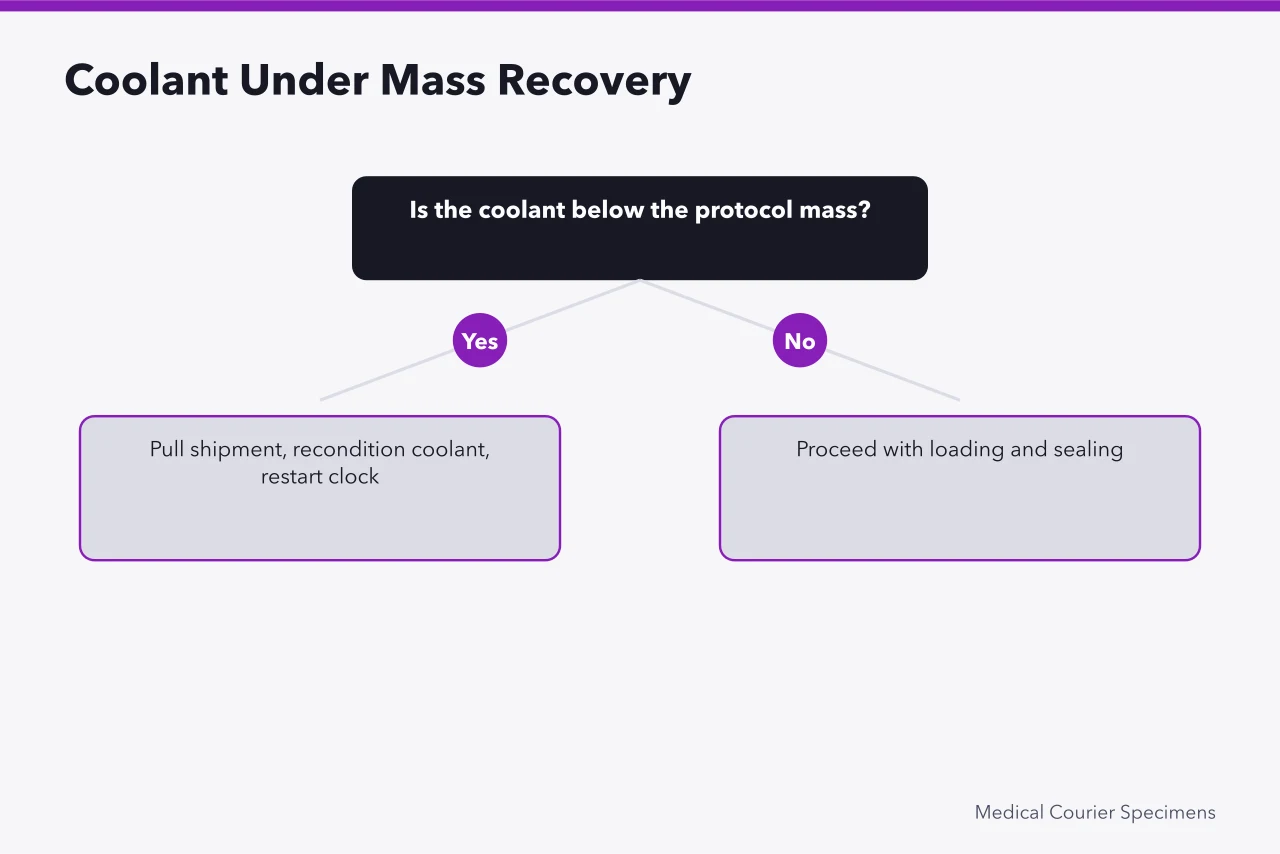
The common failure is a coolant that comes in under mass. The recovery is to pull the shipment, recondition the coolant to the protocol mass, and restart the clock. Do not add a partial block of dry ice to make up the difference. Mixed masses sublimate at different rates and give you an unpredictable curve.
If the logger shows an excursion after the fact, notify the receiving lab before the box arrives, not after. The lab decides whether the specimen is still usable. Your job is to hand over the data.
- Coolant weighed against the protocol mass
- Logger placed against the specimen
- Seal number recorded on the manifest
- UN marking legible on the outer box
When to stop and hand it to a professional
Stop and call a packaging engineer or your lab's technical contact when the payload mass or the transit time falls outside the validated range. That condition is specific: if the shipment is heavier than the validated payload, or the route runs longer than the validated hold time, the system is no longer covered.
Dry ice adds a second trigger. Any air shipment of dry ice needs the operator to know the net mass and the ventilation requirements, and the FMCSA registration portal is where a new carrier starts if the route crosses into regulated for-hire operation. For the underlying physics of hold time, the cold chain overview is a reasonable primer.
Example: a Texas to Ohio frozen run
A Houston lab sends frozen plasma to a research site in Columbus. The validated system is a 12 kg box with a stated hold time of 72 hours and a dry ice mass of 5 kg. Ground transit is quoted at 40 hours.
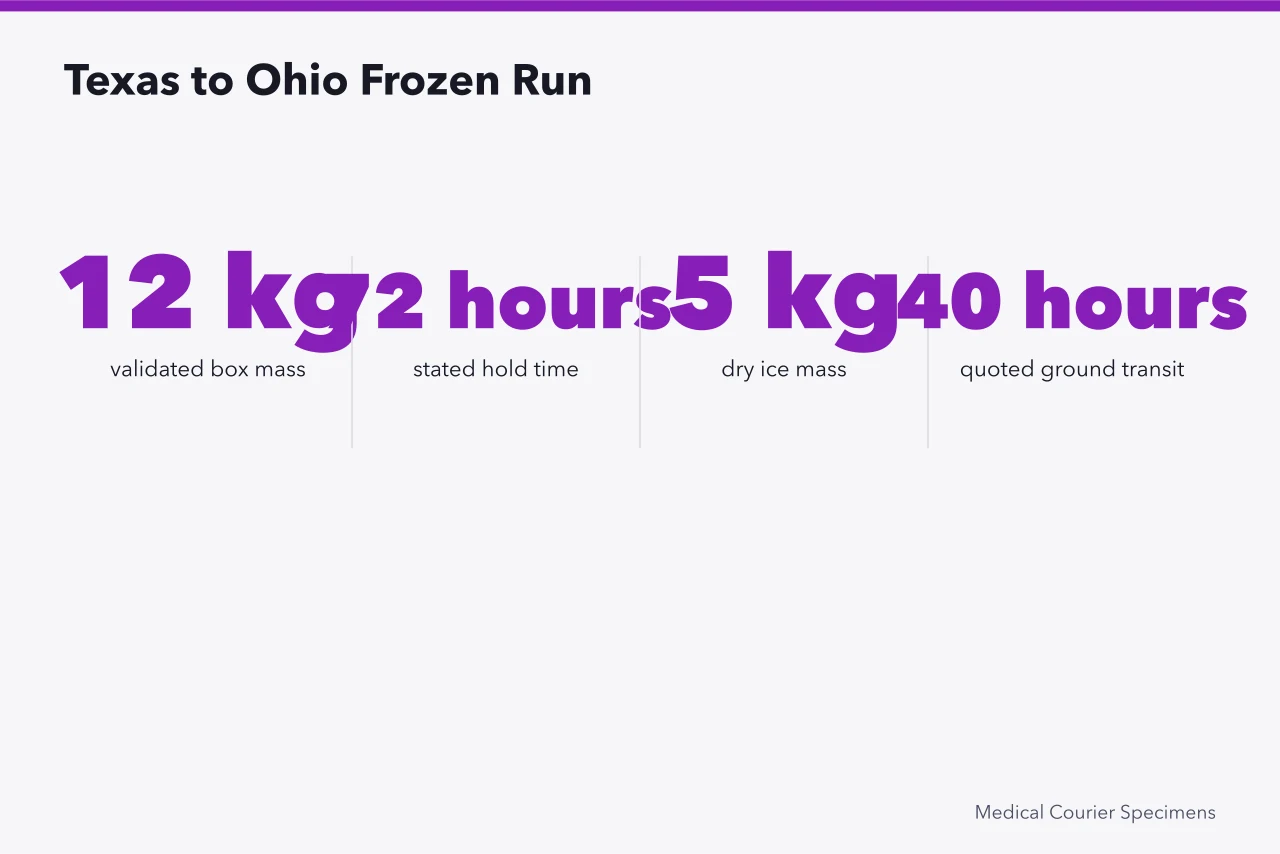
The courier conditions 5 kg of dry ice, loads the logger against the specimen, and seals the box. At delivery the logger shows the payload held below minus 60 C for the full window. That is a pass. Had the dry ice come in at 3.5 kg, the same route would likely have drifted above minus 60 C in the final hours.
State lab rules layer on top of the packaging. Texas and Ohio both set receiving requirements that can be stricter than the federal floor, and the CLIA and state lab rules article shows how one state draws that line. Couriers running temperature-sensitive routes in extreme climates should read the Phoenix heat compared with Minneapolis cold piece before quoting a hold time.
Common questions
Can I use gel packs for a frozen specimen? No. Gel packs hold a refrigerated band, roughly 2 to 8 C. Frozen specimens need dry ice or a validated phase-change coolant rated for the required band.
Is dry ice a hazardous material? Yes. It is Division 9, UN1845, and air shipments carry marking and ventilation requirements. Ground shipments still need the net mass declared.
How do I know the box held temperature? The data logger. Download it after every run and keep the file with the manifest, because a delivery signature proves nothing about temperature.
What if the logger shows an excursion? Notify the receiving lab before arrival and hand over the data. The lab makes the usability call, and your medical courier contract terms should already say who bears the cost of a rejected specimen.