Guides
Do Medical Couriers Need a DOT Number for Specimen Vehicles?
Do medical couriers need a DOT number for specimen vehicles? Most cars and light vans avoid federal registration, but California and Texas rules can still apply.
What to take away
- Most cars and light cargo vans under 10,001 pounds GVWR that stay within one state do not need a federal USDOT number for routine specimen deliveries.
- A USDOT number is required for heavier vehicles, interstate runs, placarded hazardous materials, or when a state adopts its own threshold.
- California uses a motor carrier permit and CA number that can catch small for-hire couriers; Texas focuses on larger vehicles and hazardous materials.
- Missing a required number can cause an out-of-service order, a failed vendor audit, or a civil penalty.
The phrase DOT number for medical courier vehicles describes two layers: a federal USDOT registration and state commercial vehicle rules. Owners often assume every courier car needs a USDOT number. Federal rules do not work that way. The trigger is not what you carry, but the vehicle and the route.
Federal USDOT number triggers
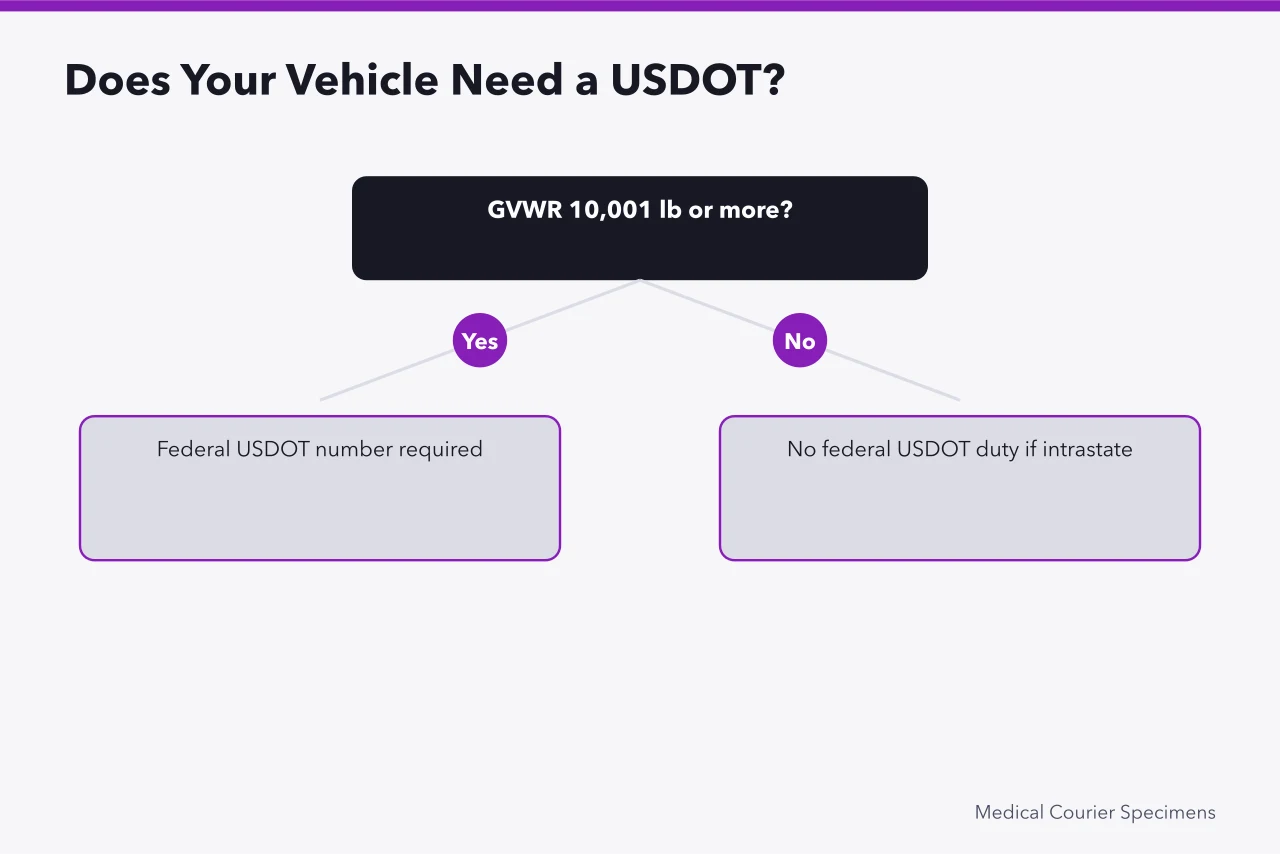
FMCSA requires a USDOT number for a commercial motor vehicle in interstate commerce when any of these apply. The vehicle has a gross vehicle weight rating, gross vehicle weight, gross combination weight rating, or gross combination weight of 10,001 pounds or more. It is designed or used to transport more than 8 passengers, including the driver, for compensation. It transports hazardous materials in a quantity that requires placards. Most medical courier cars and small cargo vans fall below the 10,001-pound threshold and carry non-placarded specimens. Those vehicles have no federal USDOT duty if they stay intrastate.
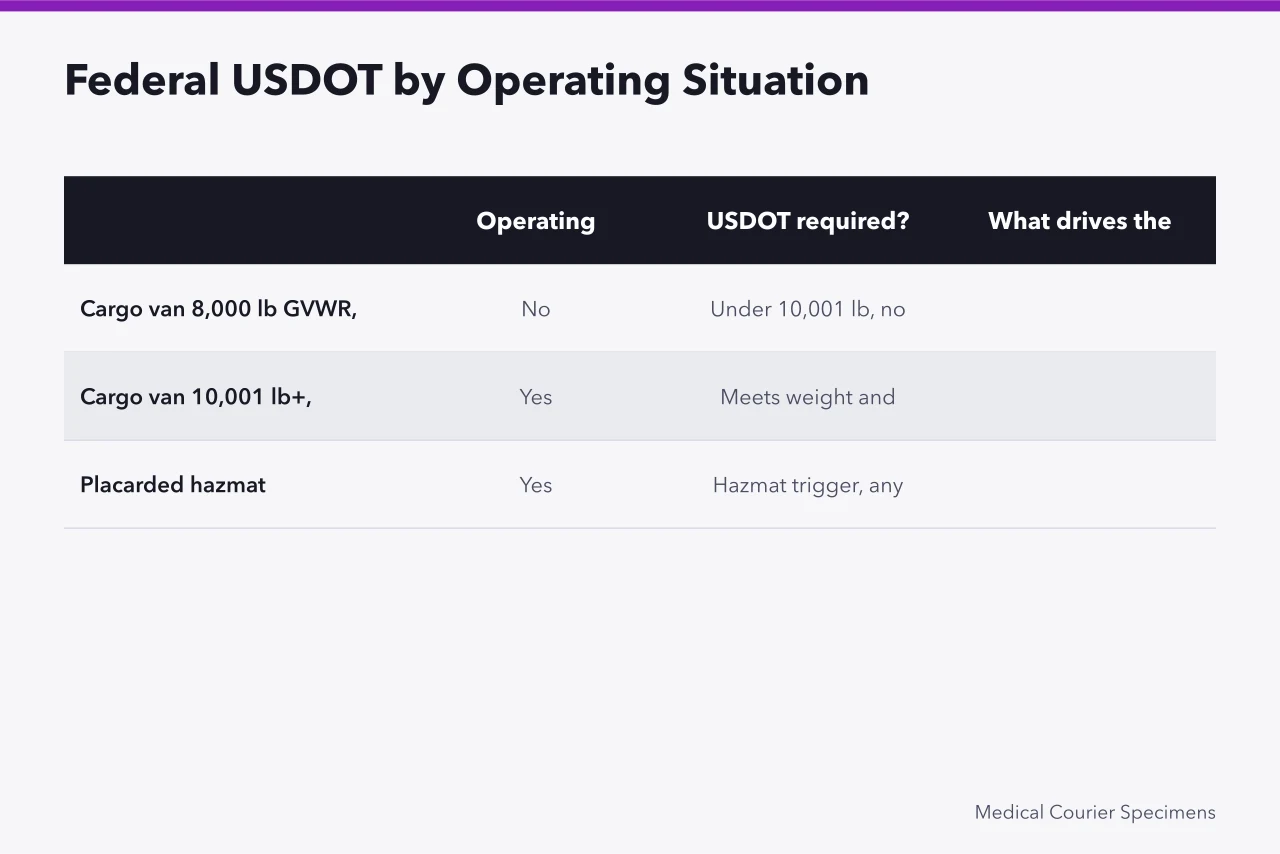
| Operating situation | Federal USDOT number required? | What drives the answer |
|---|---|---|
| Cargo van, 8,000 lb GVWR, intrastate, non-hazmat specimens | No | Under 10,001 lb and no interstate trigger. |
| Cargo van, 10,001 lb GVWR or more, interstate | Yes | Meets the federal commercial vehicle weight and interstate tests. |
| Any vehicle carrying placarded hazardous material specimens, interstate | Yes | Hazardous material trigger applies regardless of weight. |
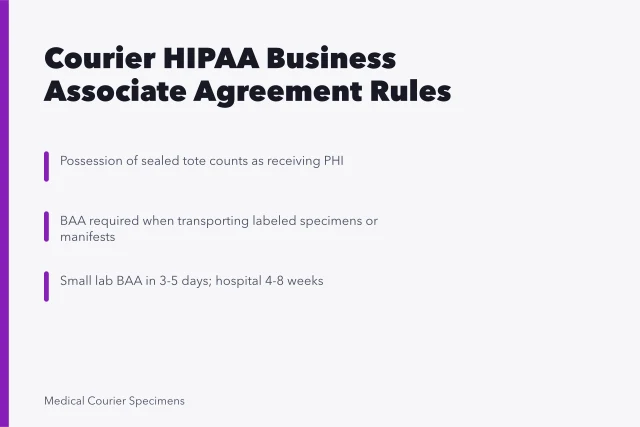
Three rule layers operate at once: federal USDOT registration, state motor carrier permits, and municipal or private client rules. A city courier permit or a hospital vendor form does not create a USDOT duty, and a USDOT number does not replace a city permit. Use the FMCSA registration portal to check your operating classification and start an application. A HIPAA business associate agreement does not change this vehicle question. The HHS business associate guidance explains that separate contract duty.
California intrastate motor carrier permits
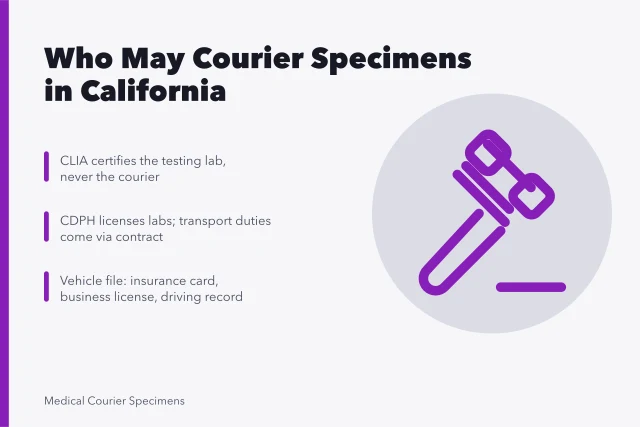
California adds a state layer for for-hire carriers. The California Highway Patrol issues a motor carrier permit and a CA number. A commercial motor vehicle under state law includes vehicles with a GVWR of 10,001 pounds or more, vehicles designed to carry 10 or more passengers including the driver, and vehicles transporting placarded hazardous materials. A courier with a cargo van under 10,001 pounds that stays inside California and does not carry hazmat may not need a CA number. But many hospitals and labs still list a CA number on their vendor forms. Check the CLIA and state lab rules that also affect California couriers.
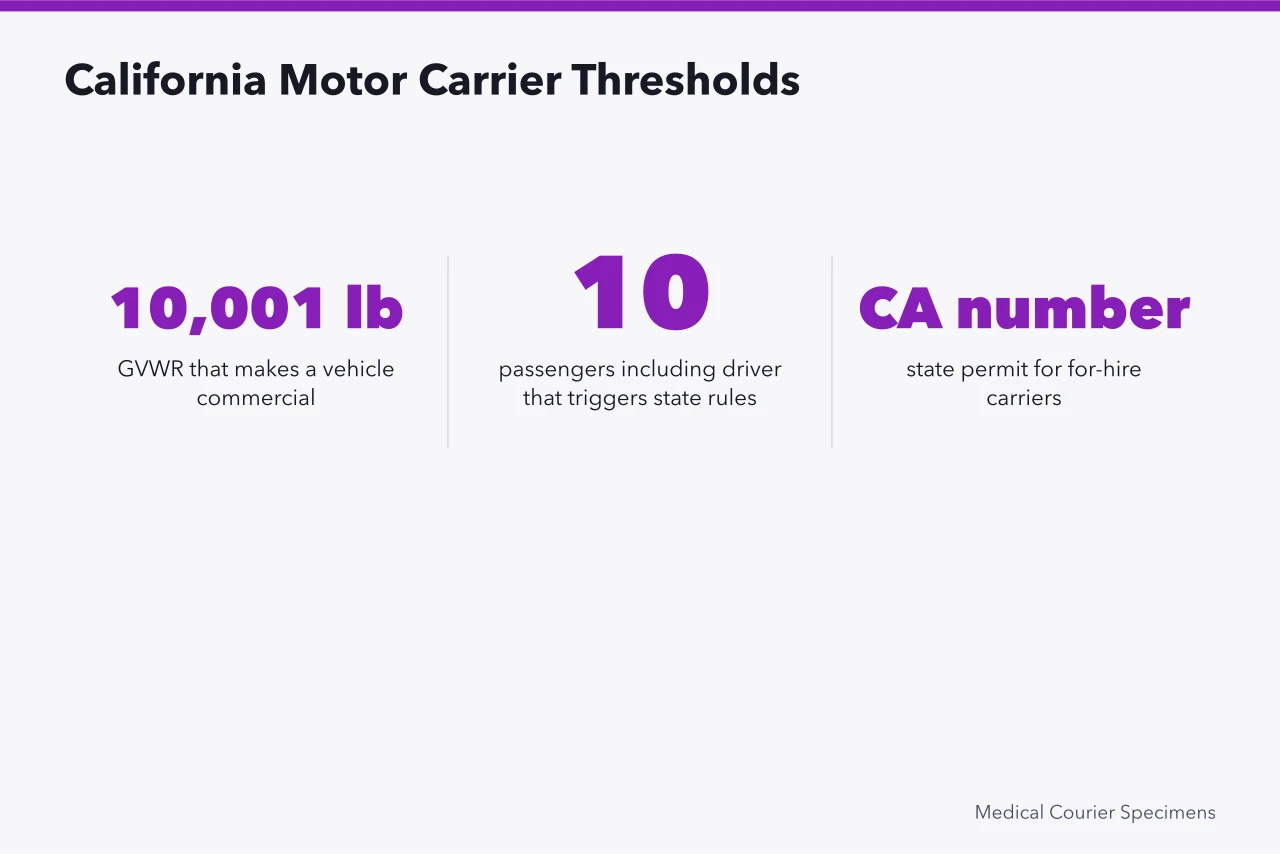
A California-only courier does not need a USDOT number unless it operates across state lines or transports placarded hazardous materials. If the same van also crosses into Nevada or Arizona, the federal triggers apply.
Texas intrastate registration for couriers
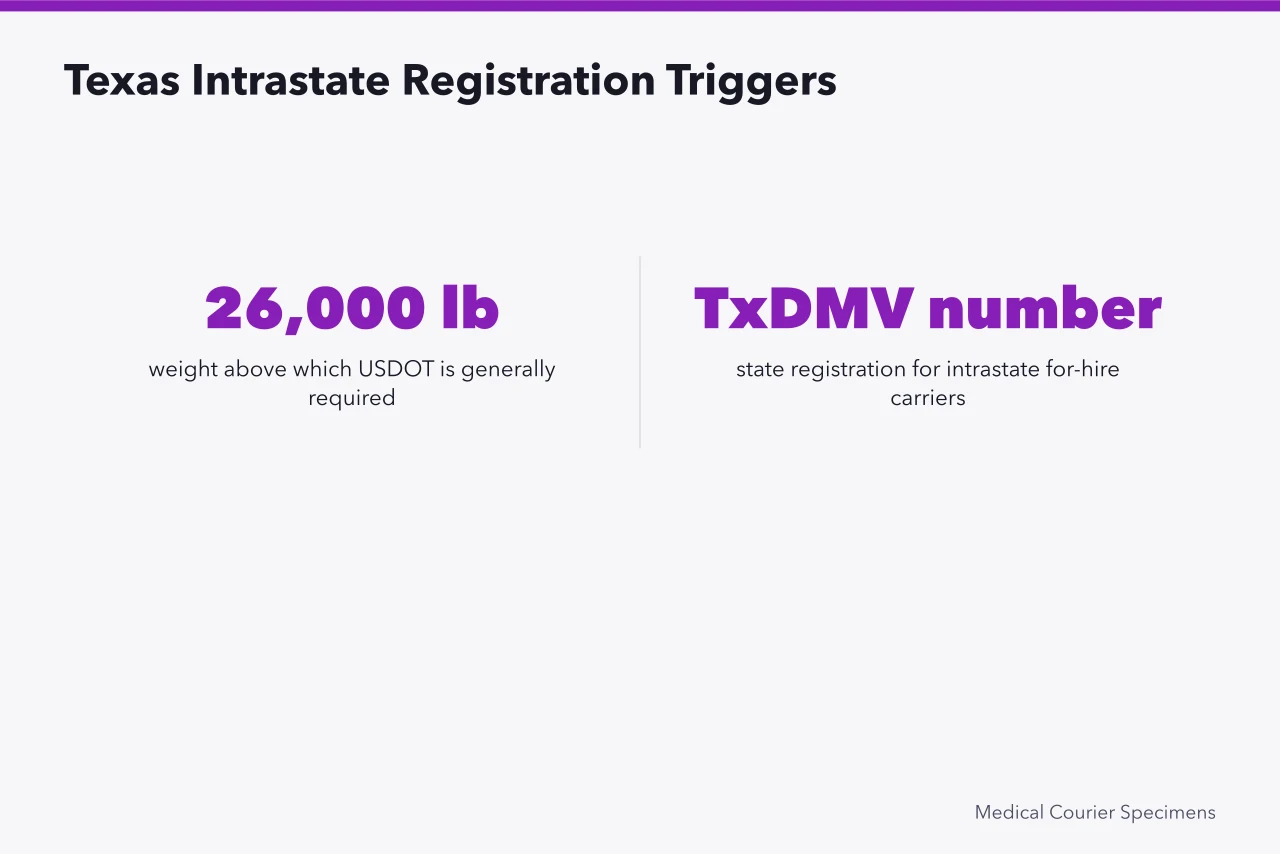
Texas requires intrastate for-hire motor carriers to register with the Texas Department of Motor Vehicles. A USDOT number is generally required for intrastate vehicles that weigh more than 26,000 pounds, carry placarded hazardous materials, or operate outside Texas. A cargo van under 26,000 pounds carrying routine patient specimens inside Texas usually does not need a USDOT number. It may still need a TxDMV number, so owners should confirm with the Texas Department of Motor Vehicles. A Houston facility may check this during vendor review, as described in Texas Medical Center accounts.
What a USDOT application asks for
The MCS-150 form is the key application document. It collects information rather than a large document package. You need the legal business name, the employer identification number, the principal place of business, and the number of commercial motor vehicles and drivers you operate. The application also asks whether you transport hazardous materials and, if so, which class.
- Decide whether you operate interstate, intrastate, or both.
- Gather the company legal name, EIN, and vehicle count.
- Complete the MCS-150 form through the FMCSA registration portal.
- List any hazardous materials classes that apply to your specimen shipments.
Keep the registration current. FMCSA requires a biennial MCS-150 update even when nothing has changed.
What happens without a required number
A driver stopped at a roadside inspection can be placed out of service on the spot. The carrier cannot move that vehicle until it registers and receives a USDOT number. A hospital or laboratory audit can reject the courier as an unregistered motor carrier. FMCSA can also issue a civil penalty for operating a commercial motor vehicle without a required USDOT number. If the shipment crosses from Detroit to Windsor or Buffalo to Ontario, the cross-border specimen courier guide covers the additional carrier and customs steps.
Common questions
Does a passenger car used for medical courier work need a USDOT number? No, a passenger car that stays within one state and does not carry placarded hazardous materials is below the federal commercial vehicle threshold. Some states may still require a motor carrier permit.
Does a 9,000-pound cargo van need a USDOT number if it crosses state lines? No, the federal threshold is 10,001 pounds GVWR or more, so a 9,000-pound van in interstate commerce does not meet the weight trigger unless it transports placarded hazmat. It may still need state registration.
Does transporting blood or urine create a hazmat trigger? Most routine blood, urine, and pathology specimens are not placarded hazardous materials. Category A and B infectious substances can carry separate dangerous goods rules, which DOT and IATA rules explains.
Does a CA number replace a USDOT number? A CA number covers California intrastate registration. It does not replace a USDOT number for interstate travel or federally regulated hazardous materials.