
Guides
How to decide between new and used medical courier equipment
New or used medical courier equipment, decided by cost per usable year and downtime risk, with the categories that should never be bought secondhand.
What to take away
- Compare cost per usable year, not purchase price. An asset that costs less and lasts a third as long is more expensive, and it fails at a worse moment.
- Add the cost of downtime to the used side of the comparison. In this trade a vehicle off the road is a missed clinical deadline, not an inconvenience.
- Three categories should not be bought used without evidence of history: anything that measures, anything that contains material, and anything that protects a person.
- Buy used where failure is visible and cheap. Buy new where failure is silent and expensive.
Run the arithmetic below with your own numbers: the quotes in front of you, your mileage, your climate and your maintenance log. What matters is not which side looks bigger on the day of purchase, but that both sides are filled in the same way.
The comparison that actually decides it
Write both options in the same form:
New vs used true cost
New
- Purchase price
- Higher
- Preparation cost
- Included
- Expected repairs
- Low
- Resale value
- Predictable
- Downtime cost
- Lower risk
- Verification cost
- Not needed
Used
- Purchase price
- Lower
- Preparation cost
- Add securing, surfaces
- Expected repairs
- History gaps raise it
- Resale value
- Uncertain
- Downtime cost
- Reliability conversation
- Verification cost
- Required if measures
cost_per_usable_year = (purchase_price + preparation_cost + expected_repairs - resale_value) / expected_usable_years
Then add the two terms that people leave out.
- downtime_costis the revenue and reputation lost on the days the asset is unavailable, multiplied by the number of such days you expect. For a route serving a laboratory with a fixed analyzer schedule, one day is not one day's revenue, it is a conversation about reliability.
- verification_costapplies to anything that measures. A used device with no history has to be verified before it means anything, and that cost belongs on the used side of the comparison.
Run both options with the same expected usable years and the same mileage. Most used-versus-new arguments collapse the moment somebody insists on comparing like periods.
Where used works and where it does not
Buy used?
- Vehicle
- Often, with a proper inspection and service history
- Shelving, securing hardware, load fittings
- Yes
- Coolers and passive containment
- Only with visible condition and known history
- Devices that measure or record condition
- Rarely, and never without verification
- Personal protective equipment
- No
- Spill and exposure supplies
- No
- Phones, mounts, chargers
- Yes
Why
- Vehicle
- Failure is visible, repairable, and the market is deep
- Shelving, securing hardware, load fittings
- Condition is obvious on inspection
- Coolers and passive containment
- A worn closure fails silently and ruins a load
- Devices that measure or record condition
- An inaccurate reading is worse than no reading
- Personal protective equipment
- Protection you cannot evidence is not protection
- Spill and exposure supplies
- Expiry and integrity cannot be judged by looking
- Phones, mounts, chargers
- Cheap, visible failure, easy to replace
The pattern in the middle column is the rule worth remembering: buy used where a fault announces itself and costs little to fix, buy new where a fault is silent and lands on a specimen or a person.
The items you are actually deciding over are few: the vehicle, usually a cargo van or a refrigerated van; containment, meaning validated insulated shippers, dry-ice shippers and rigid coolers; and measurement, meaning data loggers and thermometers, alongside the shelving, load fittings and securing hardware that hold them in place.
Buy used or new
Does a fault announce itself visibly?
Buy used, repair is cheap
Buy new, silent failure harms
The vehicle decision in detail
The vehicle is usually the largest number and the best candidate for buying used, provided three things are true.
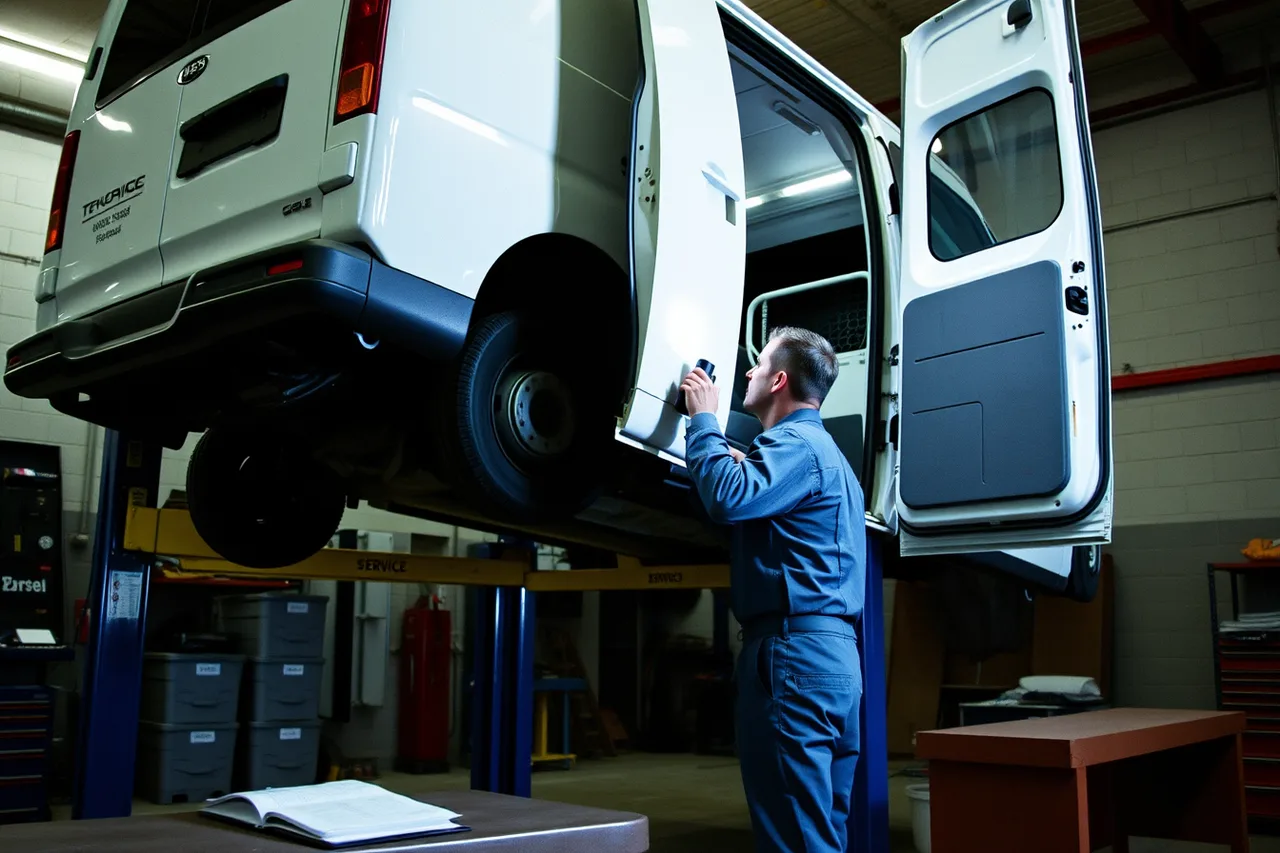
- You had it inspected by someone who works for you, not by the seller's mechanic. Pay for this every time; it is the cheapest insurance in the transaction.
- The service history exists and is coherent.Gaps in a maintenance record are gaps in your expected repairs figure, and they should move that number up.
- It fits your actual sites.Height limits at hospital parking structures, loading dock access and turning space at clinics are decided before purchase or discovered afterwards. Check them against the real route.
Then prepare it properly. A used vehicle still needs the securing points, the cleanable surfaces and the separation of clean from returning material described in the equipment and setup guide. Preparation cost is part of the purchase, and it is often the item that closes the gap between the used and new options.
For used vehicles, the realistic sourcing channels are fleet and lease-end resale, commercial vehicle auctions, and dealer trade-ins, and each carries a different amount of history. Fleet and lease-end resale usually come with the maintenance record; auctions usually do not, which is the gap you are pricing.
Containment and measurement: the two silent failures
Containment fails quietly. A closure that no longer seats, a shell with a hairline crack, a hardened seal: none are obvious in a photograph. The first evidence is a load that arrives compromised.

Before buying used containment, establish who owned it, what it carried, how it was cleaned, and whether it was ever dropped. Without those answers, the item is a gamble on somebody else's care.
Measuring devices fail quietly, because they keep producing numbers. A device that reads confidently and wrongly is the worst purchase in this trade. It produces evidence worse than none.
If you buy one used, budget for verification against a known reference before first use and on a schedule afterwards. In practice that means a calibration traceable to NIST, run by a laboratory accredited to ISO/IEC 17025. Keep the certificate by serial number.
Which of these categories you need depends on what you carry. Classification comes first. PHMSA's overview of transporting infectious substances explains why identifying the material precedes choosing a packaging and handling path, and the rules behind it are 49 CFR 173.196 for Category A infectious substance packaging and 49 CFR 172.704 for hazmat training.
The packaging, marking and training questions that follow belong with PHMSA's transporting infectious substances safely and with the contracting laboratory's protocol. The answers may remove the decision entirely if the laboratory supplies the packaging.
Safety equipment is not a cost comparison
Buy personal protective equipment and spill response supplies new, full stop. The obligation is protection that works, and secondhand protection cannot be evidenced. When a route can involve blood or other potentially infectious material, the governing rule is OSHA's bloodborne pathogens standard, 29 CFR 1910.1030, and PPE selection sits in 29 CFR 1910.132.

OSHA recommended practices for safety and health programs describe an employer's routine: identify hazards, control them, train people, and review whether controls hold. None of that survives equipment with an unknown history, so treat this line as fixed and spend the savings elsewhere.
Timing the purchase
- Buy the vehicle after the route shape is known, not before. Owners who buy first tend to buy too large.
- Buy containment after the classification question is answered, for the same reason.
- Delay anything that only improves comfort or appearance until the route is running and paying.
- Replace on evidence rather than on a calendar: the maintenance log and the defect reports from drivers tell you when an asset has become expensive.
The full pre-opening list, tiered by when each item is checked, is in the equipment checklist for a first vehicle.
The second vehicle is a different decision
For the first vehicle, reliability dominates and new often wins on nerves alone. For the second, the calculation changes: you now have cover, a spare route option and real maintenance data from the first, so a used purchase carries far less downtime risk. This is one of the few places where waiting genuinely lowers cost.
It also arrives with a staffing question: a vehicle with nobody trained to drive it is an expense, not a capacity increase. So the hiring decision comes first or alongside.
That sequencing is covered in how to hire drivers who last and in the hiring and training guide. The wider readiness tests for growth are in the guide to adding routes and territory.
Common questions
Is leasing a way around the whole question?
It changes the cash shape, not the reliability question. Compare the total cost across the same period, including the end of term position and any mileage limits, which matter a great deal for route work.
How do I judge expected usable years for a used vehicle?
From its service history and your own mileage, not from the seller's estimate. If the history is missing, shorten the estimate rather than shortening the inspection.
Can I buy used containment from another courier?
You can, and it is the one used source with useful history, because they can tell you what it carried and how it was cleaned. Ask anyway, and inspect the closures rather than the outside.
What is the most common expensive mistake here?
Buying a bargain measuring device with no verification history, then relying on its readings for months. The saving is small and the exposure is the whole load it certified.