Guides
The Hired and Non-Owned Auto Insurance Gap for Medical Couriers
Medical courier non-owned auto insurance is required by many lab contracts. The endorsement costs about $450 to $1,100 annually for one driver.
What to take away
- Most commercial auto policies cover only scheduled autos. Personal cars used for specimen runs are usually excluded without a hired and non-owned auto endorsement.
- Labs and hospitals often require the endorsement by contract. State regulators treat personal vehicles used for business as a commercial exposure.
- Annual cost for a one-driver courier with one owned cargo van and a personal backup typically ranges from about $3,850 to $8,000, depending on limits and history.
- The gap appears at claim time. An owner who expects the driver's personal auto policy to pay often gets a denial letter.
Most motor carriers and lab procurement teams assume a standard commercial auto policy covers every vehicle a courier uses. That assumption is wrong. The medical courier non-owned auto insurance gap opens when a personal car is used for business.
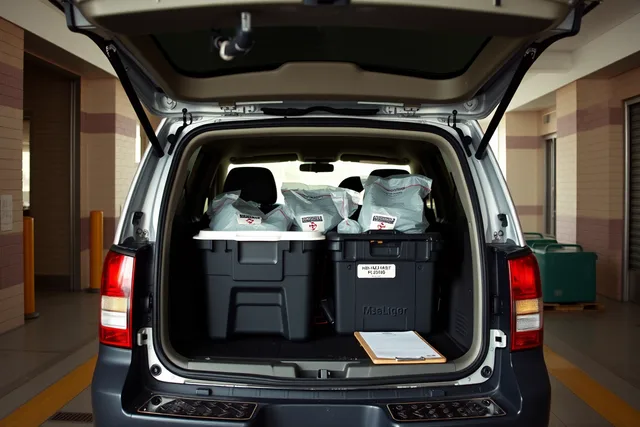
Under the common ISO business auto form, hired autos and non-owned autos are separate covered-auto designations. A policy that schedules only the owned cargo van leaves personal cars off the declarations page. Hired autos are vehicles leased, rented or borrowed for business use. Non-owned autos are vehicles the business does not own but uses for its work, including an owner's personal car or a 1099 driver's car.
State regulators do not write a single model endorsement for this gap. They rely on the policy's covered-auto symbols and the carrier's filed forms. A lab contract often states the courier must carry hired and non-owned auto coverage, but that requirement alone does not amend the policy. The declarations page and endorsements control what gets paid. Lab contracts often name the coverage, but the exact wording matters; see Medical courier contract terms for how exclusions get written.
What hired and non-owned auto costs
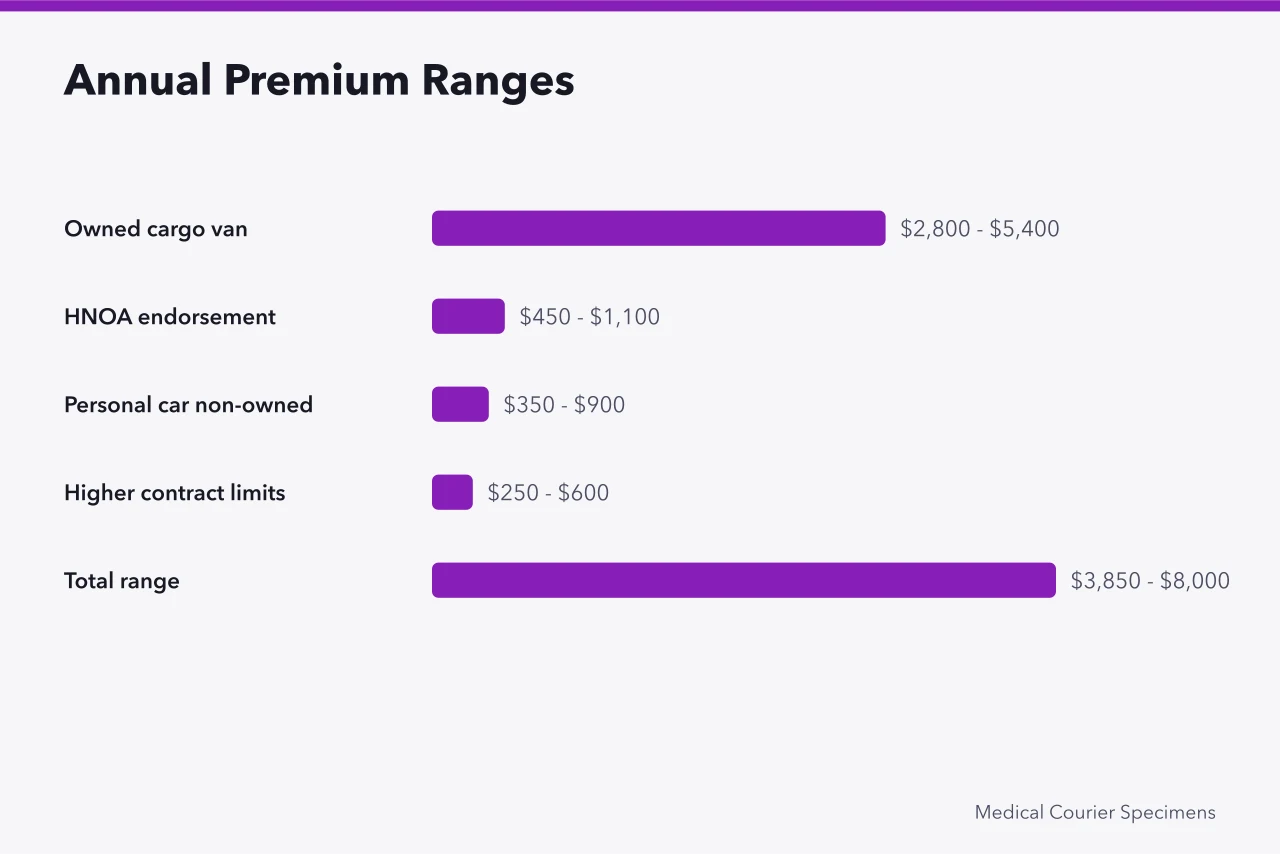
Premiums are small next to a denied collision claim, but they are not zero. The table below shows an illustrative range for a one-driver courier with one owned cargo van, one owner personal car used occasionally, clean records, and urban or suburban territory. These are not national averages.
Show the numbers
| Business auto policy for one owned cargo van | $2,800–$5,400 |
|---|---|
| Hired and non-owned auto endorsement | $450–$1,100 |
| Non-owned coverage for owner's personal car | $350–$900 |
| Higher limits a large lab contract may require | $250–$600 |
| Total low-to-high range | $3,850–$8,000 |
A bare hired and non-owned auto endorsement for one driver commonly falls between $450 and $1,100 a year. Add a second or third driver with personal vehicles, and that line can approach $1,900 to $2,600. The total, including the owned van, is often $3,850 to $8,000 for a small operation.
Vehicle registration is separate
If the specimen vehicle weighs over 10,001 pounds or crosses state lines, the owner may need a USDOT number. DOT Number for Specimen Vehicles explains when a courier must file for one.
What moves the number
At least three cost drivers show up in quotes.
- Driver count and age profile: adding a second or third driver under 25 can push the endorsement premium 30% to 60% higher.
- Contractual required limits: a hospital chain that demands $2 million combined single limit instead of $1 million adds $250 to $600 per year.
- Territory and radius: long STAT runs across metro zones raise loss exposure and quoted premium.
- Vehicle use mix: the smaller the owned fleet relative to personal cars, the more underwriting weight sits on the non-owned endorsement.
The IRS worker classification rules do not decide whether a vehicle is non-owned. A courier paid as a 1099 contractor still uses a personal car that the business does not own. Insurance carriers look at vehicle ownership, not at whether the driver receives a W-2 or 1099-NEC. The IRS independent contractor page details the tax test.
What quotes leave out
A quote that lists only the owned cargo van misses the gap. The line item for hired and non-owned auto may be absent, or it may appear as "HNOA" with no dollar figure. Some agents attach the endorsement only after the owner asks. The written quote should show the covered-auto symbols, the limit, and the annual premium. Quoting a medical courier business job shows the other line items an invoice should list.
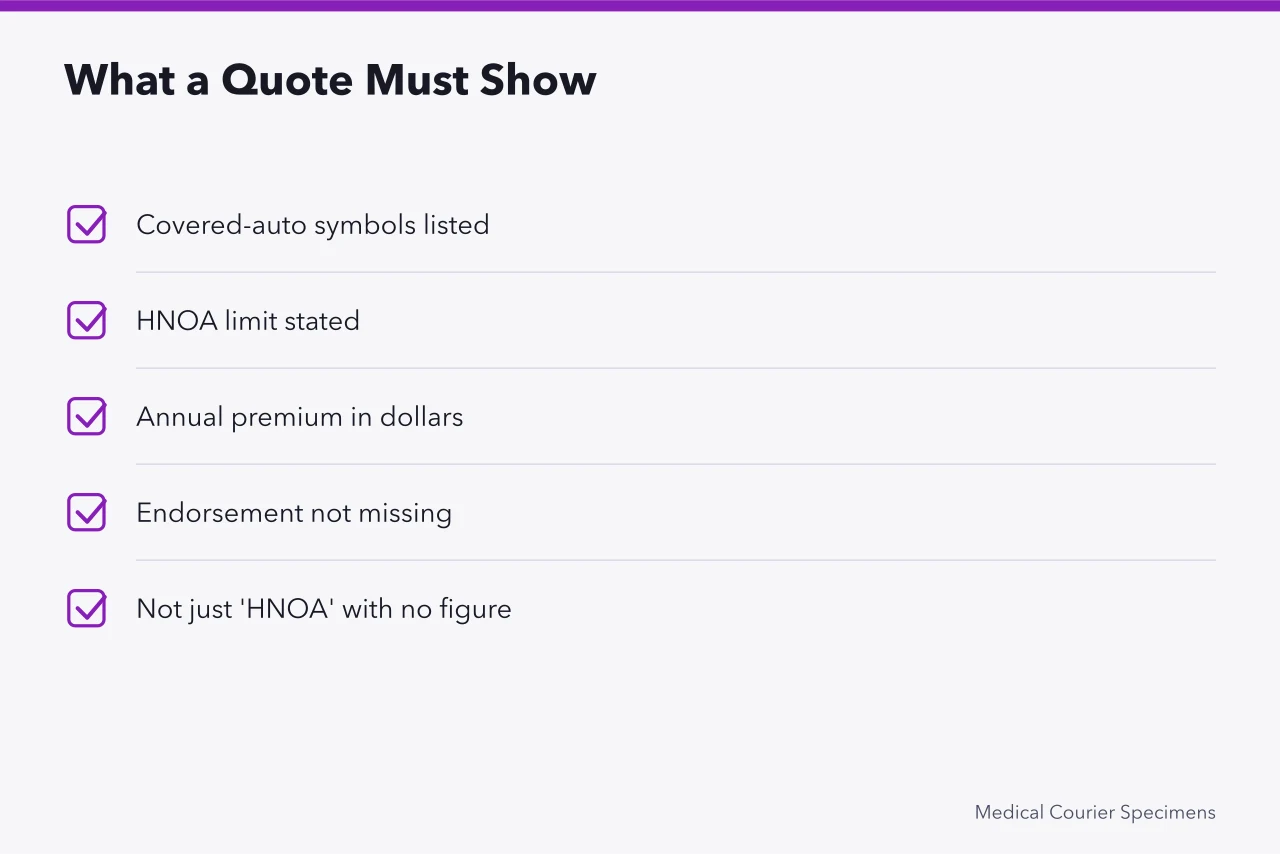
A lab contract that names vehicle classes does not by itself make your policy match. The scheduled autos and endorsements on the declarations page control what the carrier will pay.
The personal car trap
Drivers who use their own car for specimen runs often record business miles at the IRS standard mileage rate. That rate covers operating costs, not insurance. A missing hired and non-owned endorsement remains a coverage gap even when mileage is logged correctly. For tax mileage alone, IRS mileage deduction explains what the deduction does and does not cover.
Where people overspend
Owners often overspend by buying a separate commercial auto policy for a driver's personal car instead of adding the driver to the hired and non-owned endorsement. That can cost $1,200 to $2,000 more per year than the endorsement. Others buy the broadest "any auto" symbol when they run only one cargo van and one personal car. The any auto symbol raises the owned auto premium while the hired and non-owned line stays low. Ask for a quote on both structures before renewing. For the IRS rate side, IRS Publication 463 lists what the standard mileage rate includes, but the insurance endorsement is a separate purchase.
Common questions
Does a personal auto policy cover specimen delivery if the driver is a 1099 contractor? Usually not. Personal auto policies exclude business use. The courier company's hired and non-owned endorsement is the coverage that responds.
Is hired and non-owned auto coverage required by law? There is no single federal law. Lab contracts and hospital vendor requirements commonly mandate it, and state insurance regulators treat business use of personal cars as commercial.
How much does the endorsement add for one driver? Illustrative range is $450 to $1,100 per year, before any higher contractual limits.
What should a courier owner check on the declarations page? Check the covered-auto symbols. Hired autos and non-owned autos must be listed, and the limit must match the lab contract.